
Products Introduction
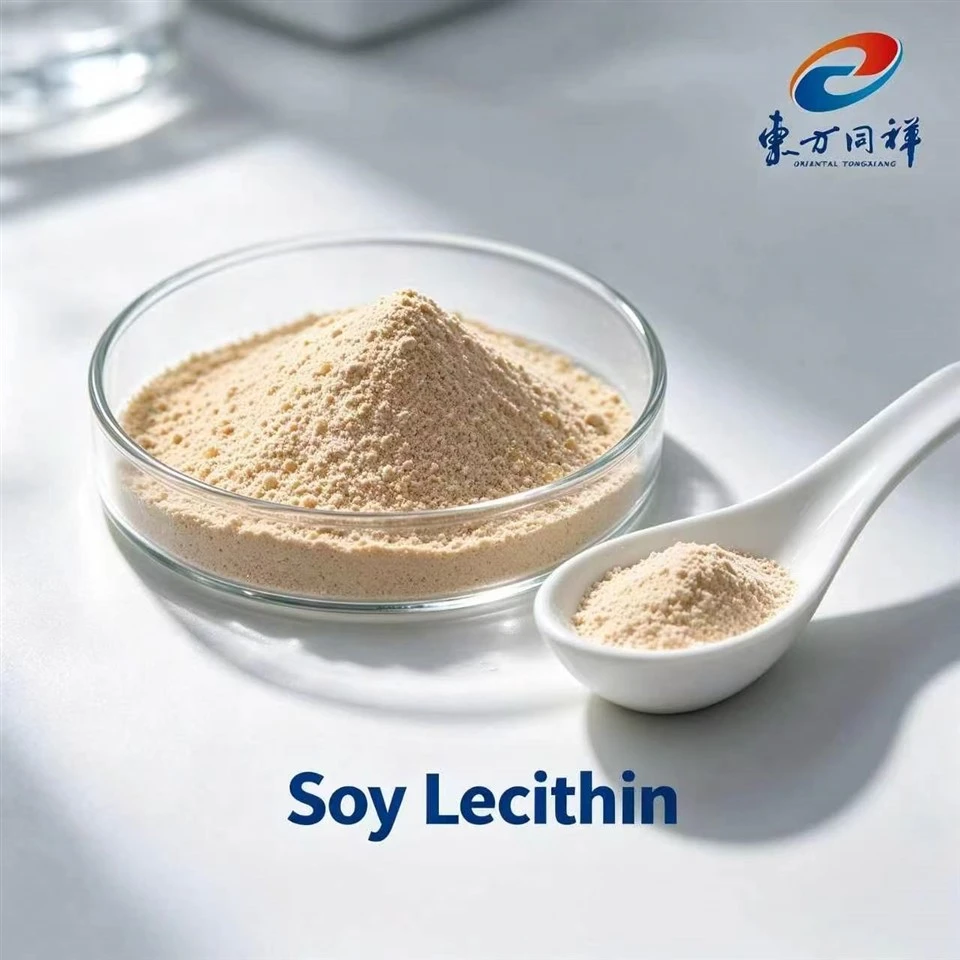
Soy Lecithin is natural phospholipid emulsifier extracted from soybean oil with PC,PE,PI,PA as main components and no chemical modification.
Oriental Tongxiang Intl provides food-grade liquid and de-oiled powder soy lecithin with different acetone insolubles, also offers optional granules, hydrolysed type and Non-GMO version with GMO info shown on COA.
Soy lecithin is widely used in confectionery, bakery, beverage, dairy alternative, meat, supplement and pet food industries; buyers focus on stable specs, suitable form and reliable documents, with low MOQ for trial orders.
Key Product Specifications
|
Item |
Soy Lecithin Liquid |
Soy Lecithin Powder |
|
Product Name |
Soy Lecithin Liquid |
Soy Lecithin Powder |
|
Material |
Soybean oil refining by-product |
Soybean oil refining by-product |
|
CAS No. |
8002-43-5 |
8002-43-5 |
|
EC No. |
232-307-2 |
232-307-2 |
|
Appearance |
Brown liquid |
Yellow powder |
|
Odor and Taste |
Characteristic soybean odor; bland taste, free from foreign odor |
Characteristic soybean odor; bland taste, free from foreign odor |
|
Acetone Insoluble |
≥ 60.0% |
≥ 95.0% |
|
Moisture |
≤ 2.0% |
≤ 2.0% |
|
Acid Value (as KOH) |
≤ 36 mg/g |
≤ 36 mg/g |
|
Peroxide Value |
≤ 5.0 mmol/kg |
≤ 5.0 mmol/kg |
|
Hexane Insoluble |
≤ 0.3% |
≤ 0.3% |
|
Residual solvent |
≥ 2.5%* |
≥ 2.5%* |
|
Nitrogen |
≤ 50Mg/kg |
≤ 50Mg/kg |
|
Solubility / Dispersibility |
Insoluble in water but dispersible; soluble in fats, oils and hexane |
Dispersible in water; soluble in fats and oils |
|
Heavy Metals (as Pb) |
≤ 2.0 mg/kg |
≤ 2.0 mg/kg |
|
Arsenic (As) |
≤ 3.0 mg/kg |
≤ 3.0 mg/kg |
|
GMO Status |
Non-GMO material with a Non-GMO statement |
Non-GMO material with a Non-GMO statement |
|
Packaging |
200 kg plastic drum; 200kg iron drum;1000kg IBC |
20kg paper box;25kg paper box |
|
Standard |
GB 1886.358-2022 |
GB 1886.358-2022 |
Typical values for reference only. Reach out to our team at Oriental Tongxiang to get the applicable spec sheets, COA, test methods, allergen statements, GMO statements, organic certificates and regulatory documents prior to purchase or product registration.
Key Benefits of Soy Lecithin
- Natural Emulsifier
Soy Lecithin is the most widely used natural emulsifier in the food industry. Because it stabilises both oil-in-water and water-in-oil systems, one ingredient can hold a formula together where a synthetic emulsifier would otherwise be needed. It is approved as INS 322 / E322 and permitted in all major markets.
- Chocolate Viscosity Reduction
In chocolate and compound coatings, Soy Lecithin lowers viscosity and yield value, so the mass flows properly at a lower fat level. Producers use it to reduce cocoa butter addition without losing enrobing performance, and it also helps limit fat bloom and sugar crystallisation.
- Bakery Performance
Added to bread, biscuits and wafers, Soy Lecithin acts as a dough conditioner and crumb softener and supports shelf life. It is normally dosed against flour weight and works with the emulsifier system already in the recipe.
- Instant Powder Wetting and Dispersion
Lecithin is what makes instant powders wet out instead of floating on the surface. For cold-water systems the enzymatically hydrolysed grade is the better choice, because its higher HLB value makes it dispersible without hot water.
- A Source of Choline and Phospholipids
Soy Lecithin supplies phosphatidylcholine and other phospholipids, and it is used in supplements and functional foods as a choline and phospholipid source. This supports brain, liver and cell-membrane positioning claims in the markets where those claims are permitted.
- Release and Anti-spattering Function
Margarine producers use it to reduce spattering in the pan, and bakers and snack makers use it as a release agent on belts, pans and moulds. The same property keeps fat from separating in spreads and dressings.
Application Selection Guide
|
Application |
Preferred Grade |
Use Level |
Contribution of Soy Lecithin |
Formulation Notes |
|
Chocolate and compound coatings |
Liquid |
0.2%–0.5% |
Lowers viscosity and yield value, reduces cocoa butter demand, limits fat bloom |
Dose step by step during conching; check flavour impact and the interaction with other emulsifiers such as PGPR |
|
Confectionery, caramels and toffees |
Liquid |
0.2%–1.0% |
Emulsifies fat and controls stickiness and sugar crystallisation |
Confirm the effect on texture and shelf life at the target water activity |
|
Bakery: bread, biscuits, wafers |
Liquid or de-oiled powder |
0.3%–1.0% on flour weight |
Dough conditioning, crumb softening and shelf-life support |
Balance against the existing emulsifier system and adjust water absorption |
|
Instant powders and beverage mixes |
Hydrolysed liquid or de-oiled powder |
0.5%–2.0% |
Improves wetting and dispersibility, prevents powder floating |
Cold-water products need the hydrolysed grade; check reconstitution and sedimentation |
|
Margarine and spreads |
Liquid |
0.1%–0.5% |
Emulsion stability and anti-spattering during frying |
Check the water-in-oil emulsion stability and the salt and acid level of the aqueous phase |
|
Dairy alternatives and ice cream |
Liquid |
0.1%–0.5% |
Emulsion stability, texture and crystal control |
Confirm the interaction with the protein system and homogenisation conditions |
|
Sauces, dressings and processed meat |
Liquid |
0.2%–1.0% |
Oil-in-water emulsion stability and water retention |
Check pH stability and the heat process of the product |
|
Dietary supplements, softgels and tablets |
De-oiled powder or liquid |
According to the formula |
Phospholipid and choline source; lubricant and binder in tablet systems |
Confirm the dosage form, and use the granule grade where dust must be controlled |
|
Pet food and feed |
Liquid (pellet coating) |
1%–3% |
Palatability, pellet durability and energy value |
Check the coating equipment and the interaction with other fats in the recipe |
The above formulas are for reference only. Please adjust them according to the formulas of your end products.
Certifications & Compliance
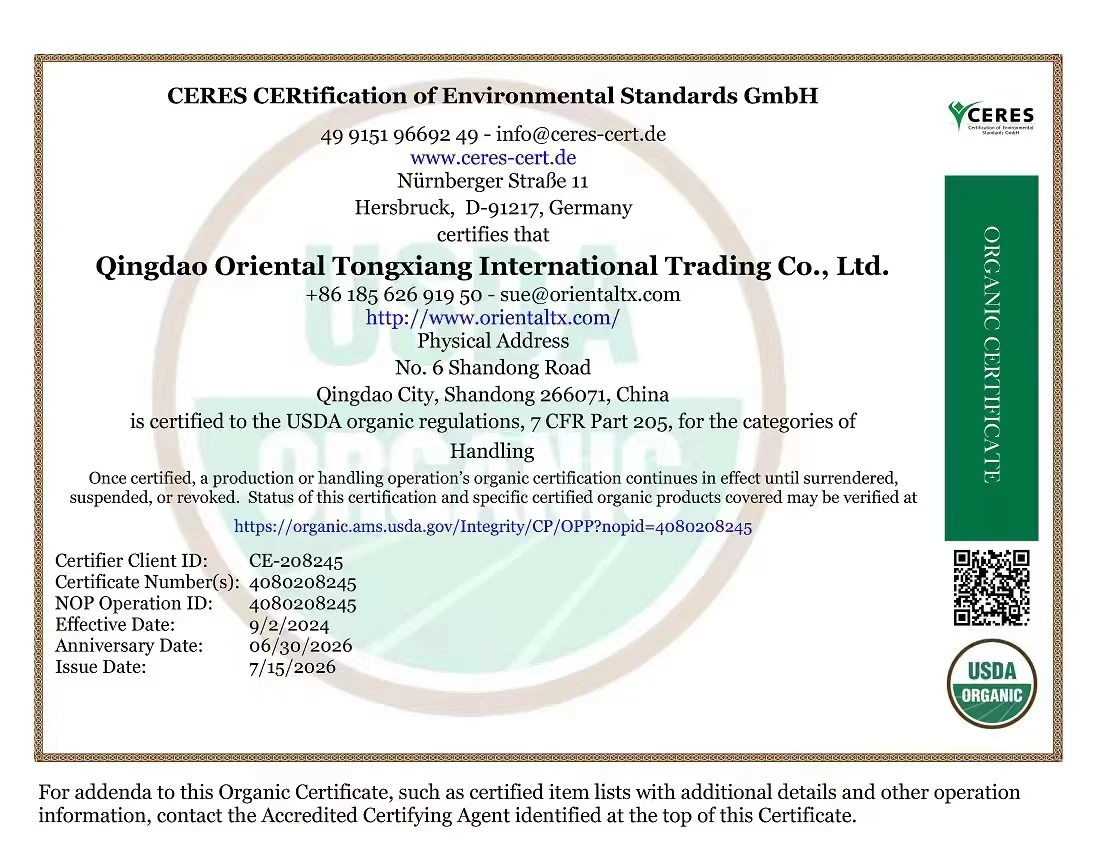
We can provide Kosher, Halal, ISO 22000 and FSSC 22000 certificates based on your order. COA, TDS, allergen statements and GMO statements are available upon request. Certificate samples are attached. Share your product grade and target market, and our team will confirm which documents fit your project.
Packaging and Supply
- Standard Packaging
Soy Lecithin Liquid: 200 kg plastic drum; 200kg iron drum;1000kg IBC
Soy Lecithin Powder: 20kg paper box;25kg paper box
- Palletization and Container Loading
The main loading port is Qingdao China. Other Chinese ports such as Shanghai, Tianjin and Guangdong can be discussed subject to order terms and logistics availability.
- Loading method
A 20' FCL typically takes about 16–18 MT of liquid lecithin in drums or IBCs, and about 18–20 MT of de-oiled powder with pallets. The exact quantity depends on the packaging format and will be confirmed per order.
- Minimum order quantity
MOQ is 200 kg for liquid and 25 kg for de-oiled powder. Smaller trial quantities can be discussed. Please contact us and provide your required form, application, packaging and port of destination.
- Delivery time
Prompt supply may be available for stock items.
Terms: EXW, FOB, CFR, CIF, or other Incoterms may be discussed according to the shipment requirement.
- Storage Conditions
Store in a cool, dry, dark and clean place. Keep the product sealed and avoid direct sunlight, high humidity, high temperature and strong odors.
FAQ
Q: What is the difference between liquid and de-oiled soy lecithin?
A: Liquid lecithin is fluid and pumpable, with not less than 62% acetone insolubles, and it is the cheaper option for chocolate, margarine and bakery. De-oiled powder is concentrated to not less than 95% acetone insolubles, dry and free flowing, with a longer shelf life, and it suits dry mixes and supplements.
Q: What is the difference between soy lecithin and sunflower lecithin?
A: Both are natural phospholipids with similar emulsifying behaviour. Sunflower lecithin is soy free, so it avoids the soy allergen declaration and the GMO question, and it usually costs more. Soy lecithin is the more widely available and more economical of the two.
Q: What is enzymatically hydrolysed or modified soy lecithin?
A: It is lecithin treated with enzymes to raise its HLB value, which makes it dispersible in cold water. It is the grade to use in instant powders and beverages. In China it is covered by GB 30607-2014 (enzymatically hydrolysed) and GB 1886.238-2016 (modified soy lecithin).
Q: Is soy lecithin an allergen?
A: Yes. Soy is a major allergen in the United States and the European Union, and soy lecithin must be declared. Fully refined soybean oil is exempt from allergen labelling, but lecithin is not exempt in either market, so the source has to appear on your label.
Q: Is your soy lecithin non-GMO?
A: Non-GMO (IP) material is available and comes with a Non-GMO statement, and the GMO status of each shipment is stated on the COA. Conventional soybean lecithin can also be supplied where your market does not require non-GMO status. Please tell us which one your customer needs.
Q: Can you supply organic soy lecithin?
A: Organic soy lecithin can be discussed subject to certification availability. Please tell us your destination market, because the organic certificate and the transaction certificate requirements differ between the US, the EU and China.
Q: What is the standard for this product?
A: GB 1886.358-2022 (National Food Safety Standard - Food Additive Lecithin), which covers lecithin from soybean, sunflower seed, rapeseed and egg yolk. It sets acetone insolubles at not less than 60%, acid value at not more than 36.0 mg/g, peroxide value at not more than 5.0 mmol/kg, lead at not more than 2.0 mg/kg and total arsenic at not more than 3.0 mg/kg.
Q: How should soy lecithin be stored after delivery?
A: Keep it sealed in a cool, dry, dark place away from direct sunlight, moisture, heat and strong odors. Liquid lecithin thickens in cold conditions and separates on long standing, which is normal; warm it gently and mix before use.
Q: What is the MOQ and the standard packaging?
A: MOQ is 200 kg for liquid and 25 kg for de-oiled powder. Liquid ships in 200 kg drums or 1,000 kg IBCs, powder in 25 kg bags with an inner food-grade PE liner. Smaller trial quantities can be discussed.
Request a Soy Lecithin Sample or Bulk Quotation
Let us know your desired product form (liquid, de-oiled powder or hydrolysed form), GMO requirement and target market. Our team at Oriental Tongxiang will get back to you within 24 hours.
Share your target grade, intended application and target market, and we can provide spec sheets, COA, sample info, packaging options and bulk quotation tailored to your needs.
Hot Tags: soy lecithin cas 8002-43-5, China soy lecithin cas 8002-43-5 manufacturers, suppliers, factory


