
Products Introduction
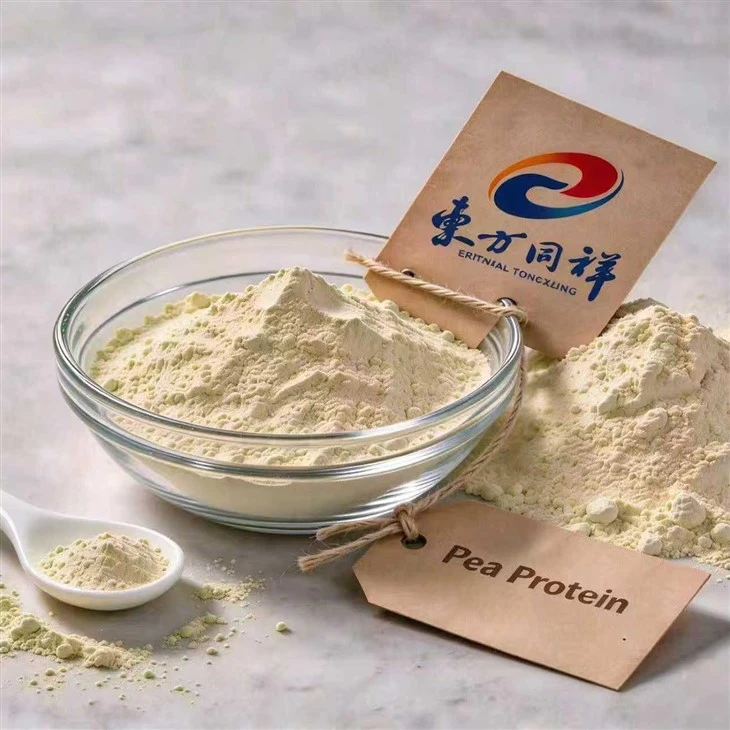
Pea protein is a protein-rich ingredient isolated from peas, mainly used for dairy-alternative food applications. It is extracted from yellow peas.
Oriental Tongxiang Intl offers Pea Protein in both conventional and organic powder; organic grades come with organic and transaction certificates per shipment.
Pea protein, containing all nine essential amino acids for human nutrition, is widely used in dairy-alternative products, plant-based beverages, smoothies, milkshakes, nutritional powders and snack formulations to boost protein content and optimise flavour profiles.
Key Product Specifications
|
Item |
Specification |
|
|
Product Name |
Pea Protein |
|
|
Product Type |
Pea Protein Powder |
Organic Pea Protein Powder |
|
Material |
Yellow pea |
Yellow pea |
|
CAS No. |
222400-29-5 |
222400-29-5 |
|
Molecular Formula |
C12H22O11N2 |
C12H22O11N2 |
|
Appearance – Powder |
Light yellow powder |
Light yellow powder |
|
Odor and Taste |
Neutral flavour with a mild beany note |
Neutral flavour with a mild beany note |
|
Assay |
≥80.0%; ≥ 85.0% |
≥80.0%; ≥ 85.0% |
|
Moisture |
≤8% |
≤8% |
|
Residue on Ignition |
≤ 7% |
≤ 7% |
|
Loss on Drying |
≤ 8% |
≤ 8% |
|
pH Value |
6.0-8.0 |
6.0-8.0 |
|
Solubility |
Dispersible in water; solubility ≥85% |
Dispersible in water; solubility ≥85% |
|
Protein(N x 6.25) |
≥80.0%; ≥ 85.0% |
≥80.0%; ≥ 85.0% |
|
Lead (Pb) |
≤ 0.5 mg/kg |
≤ 0.5 mg/kg |
|
Dietary Fiber |
≤ 2.0% |
≤ 2.0% |
|
Arsenic (As) |
≤ 0.5 mg/kg |
≤ 0.5 mg/kg |
Typical values for reference only. Please contact Oriental Tongxiang for the applicable product specification, COA, test method, allergen statement, GMO statement, organic certificate, and regulatory documentation before purchase or product registration.
Key Benefits
Complete Plant Protein
Pea Protein contains all nine essential amino acids and is well digested, which makes it one of the few plant proteins that can carry a product on its own. Roughly one fifth of its amino acids are branched-chain amino acids (BCAA), the group that matters most in sports nutrition.*
Soy-Free and Dairy-Free Positioning
Pea Protein replaces soy protein without bringing soy, dairy, egg or gluten into the formula. That keeps allergen labelling simpler and opens up the growing group of consumers who actively avoid soy. Pea itself is a legume, so declaration rules for pea should still be checked for the destination market.
Neutral Taste and Light Color
The flavour is neutral with only a mild beany note, and the powder is light in colour. It does not dominate a formula or darken a finished product, so less masking flavour is needed than with many other plant proteins. This matters most in beverages, bars and dairy alternatives.
Function, Not Only Nutrition
Pea Protein emulsifies, gels and binds water, so it contributes texture as well as protein. In plant-based meat it helps build structure and hold the patty together, and in bars it acts as a binder. Formulators can often reach the texture target with less hydrocolloid.
Protein Claim Efficiency
At an isolate level of 80% or more on a dry basis, a small dose delivers a large protein figure on the label. That keeps the protein cost per gram low and leaves room in the formula for flavour, sweetener and fibre systems.
Bakery and Pasta Fortification
Added to bread, cakes and pasta, Pea Protein raises the protein content and supports dough handling, and published work indicates it can also delay staling and extend shelf life. Addition levels are moderate, because higher doses affect volume, crumb and colour.
Vegan and Clean-Label Fit
Pea Protein is plant-based and carries no animal inputs, which supports vegan, vegetarian and clean-label claims, and it fits the sustainability story that plant-based brands are built on. It is also a widely recognised ingredient, so it does not need explaining to shoppers.
Application Selection Guide
|
Application |
Preferred Grade |
Use Level |
Contribution of Pea Protein |
Formulation Notes |
|
Plant-based meat analogues (patties, mince, sausages) |
conventional or organic |
3%–10% |
Binding, gel structure and emulsification; protein contribution for a meat-like texture |
Often used with soy, wheat or mycoprotein; check gel strength and water holding, and confirm the grade before high-moisture extrusion |
|
Plant-based beverages and RTD protein drinks |
80%, fine mesh |
2%–6% |
Protein level and body, with no soy or dairy allergen |
Check mouthfeel and sedimentation over shelf life; confirm pH, heat treatment and homogenisation conditions |
|
Powder beverage and meal-replacement mixes |
80% |
15%–35% |
Main protein source; high protein per serving at a low inclusion rate |
Check dispersibility, wettability and caking; balance with fibre and sweetener systems |
|
Protein bars and snacks |
80% |
10%–25% |
Binding, texture control and the protein claim |
Watch hardening over shelf life together with polyols; adjust moisture and humectants |
|
Sports nutrition (powders and RTDs) |
80% |
20–30 g protein per serving |
Balanced amino acid profile including BCAA |
Confirm flavour masking for the beany note and solubility at the target pH |
|
Bakery and pasta fortification |
conventional or organic |
3%–10% |
Raises protein content; supports dough handling and may delay staling |
Adjust water absorption; higher levels affect volume, crumb structure and colour |
|
Dairy alternatives (yoghurt, cheese, ice cream) |
80% |
1%–5% |
Body, creaminess and protein enrichment |
Check fermentation behaviour, protein stability, syneresis and homogenisation |
|
Pet food and treats |
conventional or organic |
2%–10% |
Hypoallergenic protein source; replaces soy protein |
Confirm the amino acid balance for the target species and the destination-market feed rules |
|
Infant formula |
Not intended |
- |
GRAS notifications for pea protein do not cover infant formula |
Do not position Pea Protein for infant formula without a separate regulatory assessment for the destination market |
The above use levels are for reference only. Please adjust them according to your own formula and confirm the final use level against the food regulations of your market.
Certifications & Compliance
Oriental Tongxiang Intl can supply the Organic certificate for Organic Pea Protein, please see attachment. The following documents can be supplied depending on the commercial order and the destination market: Kosher, Halal, ISO 22000, FSSC 22000, Non-GMO statement, allergen statement, COA, TDS and MSDS. For organic shipments, the organic transaction certificate is issued for the lot. Tell us your grade and destination market, and we will confirm which documents apply.

Packaging & Supply
Standard Packaging
Conventional Pea Protein: 25 kg net bag with inner food-grade PE liner
Organic Pea Protein: 25 kg net bag, packed on the organic line.
Palletization and Container Loading
The main loading port is Qingdao China, other Chinese ports such as Shanghai, Tianjin and Guangdong can be discussed subject to order terms and logistics availability.
Loading method
Typically 20 MT per 20' FCL; the exact quantity depends on the packaging format and will be confirmed per order
MOQ
MOQ is 25 kg. Please contact us and provide your required grade, form, application, packaging and port of destination.
Delivery time
Prompt supply may be available for stock items.
Terms
EXW, FOB, CFR, CIF, or other Incoterms may be discussed according to the shipment requirement.
Storage Conditions
Store in a cool, dry, dark and clean place. Keep the product sealed and avoid direct sunlight, high humidity, high temperature and strong odors.
FAQ
Q: What is the difference between pea protein isolate and pea protein concentrate?
A: Isolate is refined further and reaches 80% protein or more on a dry basis, with less starch and fibre, which suits beverages and sports nutrition. Concentrate is 50% protein or more and is more economical for bakery, snacks and pet food.
Q: What is the difference between your conventional and organic pea protein?
A: The protein and microbiology specifications are the same. The organic grade is made from certified organic peas on a certified line, and it ships with the organic certificate and a transaction certificate per lot. It costs more and usually has a higher MOQ.
Q: Is pea protein an allergen?
A: Pea is a legume, but it is not soy. Our material is free from soy, dairy, egg and gluten. Pea is not on the priority allergen lists of the US or the EU, while some markets such as Canada require it to be declared when it is a major component, so check your own labelling rules.
Q: Is pea protein non-GMO?
A: Pea is not a commercially grown genetically modified crop, so pea protein is non-GMO by nature. A Non-GMO statement is available, and certified organic material additionally excludes GMO by certification.
Q: Can you provide the organic certificate and transaction certificate?
A: Yes, for the organic grade. We provide the organic certificate before the order and the organic transaction certificate for each shipment, which is what your certification body normally asks for.
Q: Can you provide a COA?
A: Yes. We can provide batch-specific Certificates of Analysis (COAs) for the products supplied, upon customer request.
Q: Can I request a sample before placing an order?
A: We can provide samples for your product evaluation. Please provide your target grade, form, application area, required sample quantity, company name, shipping address and target market. Sample supply and express delivery arrangements need to be confirmed separately.
Q: What particle sizes are available?
A: 80 mesh and 100 mesh powder are standard, and a granulated form can be discussed. Mesh affects dispersibility, dust level and mouthfeel, so please specify the range your process needs.
Q: Is pea protein suitable for infant formula?
A: No. The GRAS notifications for pea protein do not cover infant formula, and infant nutrition is regulated separately in each market. Please do not position this product for infant formula without a separate assessment.
Q: How should pea protein be stored after delivery?
A: Keep it sealed in a cool, dry and dark place, away from direct sunlight, moisture, heat and strong odors. It is hygroscopic, so reseal opened bags promptly to avoid caking.
Request a Pea Protein Sample or Bulk Quotation
Let us know your required grade, product form (standard or organic), intended application and target market. Our team at Oriental Tongxiang will get back to you within 24 hours.
Share your target grade, application and market, and we can supply relevant specs, COA, sample options, packaging info and bulk pricing tailored to your needs.
Hot Tags: pea protein cas 222400-29-5, China pea protein cas 222400-29-5 manufacturers, suppliers, factory

