

Product Overview
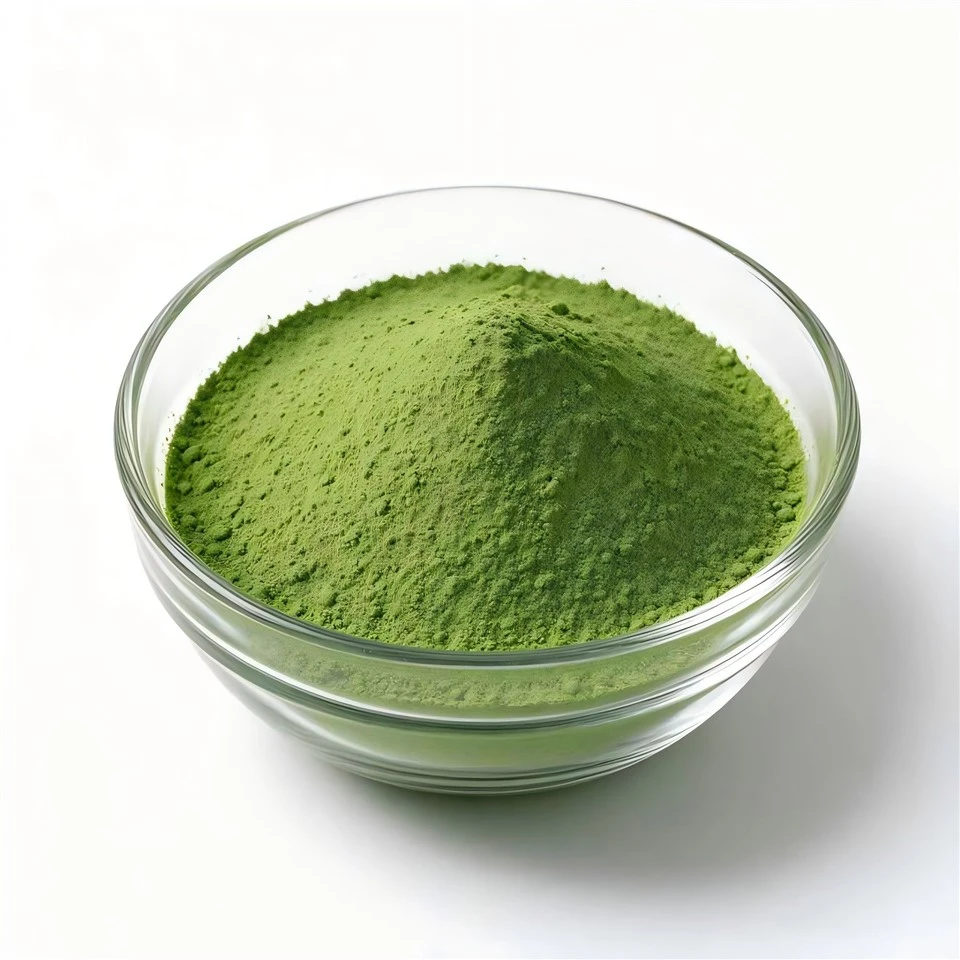
Matcha is specifically a powdered tea made from the fresh leaves of shade-grown tea plants-steamed to fix the color, dried into tencha, then ground into a fine powder. It differs essentially from ordinary green tea powder in two key ways:
Cultivation: Tea plants for Matcha must be shaded for 20–30 days before harvest, which greatly boosts chlorophyll and theanine while reducing bitter, astringent polyphenols-giving Matcha its distinctive sweet, umami, nori-like aroma.
Processing: Steam fixation preserves the emerald green color, and leaf veins and stems are removed before grinding, so only the leaf blades are milled.
Key Product Specifications
|
Parameter |
Specification |
|
Product Name |
Matcha Green Tea powder |
|
Appearance |
It usually appears in a vivid emerald green or dark green, and the specific shade varies depending on quality, processing methods, and storage conditions. |
|
Application |
Alcohol, Baking and Desserts, Functional Foods |
Key Benefits of Matcha Green Tea powder
Antioxidant and Anti-inflammatory Effects
Matcha is rich in antioxidants-tea polyphenols, catechins, chlorophyll, rutin, and quercetin-which help neutralize free radicals, combat oxidative stress, and reduce inflammation, potentially lowering the risk of chronic disease. USDA data show Matcha has a significantly higher antioxidant capacity than ordinary green tea.
Cardiovascular and Metabolic Health
The polyphenols in Matcha are associated with improved vascular health, lower blood pressure, and reduced levels of "bad" cholesterol. In addition, research suggests that its components may help improve insulin sensitivity and have a positive impact on fat metabolism.
Focus
Matcha contains both caffeine and L-theanine-caffeine provides energy, while L-theanine promotes relaxation. Together they may create a state of "calm focus," boosting alertness without the tension or palpitations often linked to caffeine. A study in older adults also suggests long-term Matcha intake may be associated with trends toward better emotional perception and sleep quality.
Application Selection Guide
|
Application |
Use Level |
Contribution of Matcha Green Tea powder |
Formulation Notes |
|
Beverages (Latte/Iced Drinks) |
3–4 g / 150 ml milk base; thin tea straight drinking approx. 2 g / 70–80 ml hot water |
Provides signature emerald green color, nori-like umami and mild tea taste; L-theanine and caffeine synergistically deliver "calm alertness" |
Pre-mix with ~30 ml hot water to make paste, then add cold milk/ice. Direct addition to cold milk causes clumps. 0.1–0.5% ascorbic acid: antioxidant for color protection. |
|
Bakery (Cake/Cookies/Bread) |
Add 1–3 teaspoons (approx. 1–3 g) per cup of flour; approx. 3% in finished product formulations |
Imparts emerald green color and distinctive tea aroma to baked goods; however, L-theanine in Matcha participates in the Maillard reaction, accelerating browning |
No baking soda (alkali damages chlorophyll); use baking powder. Lower baking temp 10–20°C, extend bake time. Foil cover after 15 min. Pre-blend matcha with butter/oil to slow hydrolytic fading. |
|
Cold-Processed Desserts (Ice Cream/Mousse/Cream) |
Reference optimal addition level for ice cream-type products approx. 0.6%; Matcha cream reference powder ratio approx. 1% |
Provides vivid green color and fresh tea flavor, enhancing perceived health attributes of the product |
Sift matcha first to avoid clumping. Antioxidant blends (VC+VE) for fat-containing dairy: inhibits color fading and protects flavor in matcha cream & ice cream. |
|
Noodles/Pasta |
Optimal addition level approx. 0.8% |
Imparts natural green color and subtle tea aroma to noodles, enhancing product differentiation |
During dough mixing, Matcha should be dry-blended with flour first to avoid localized dark spots. Cooking time should not be excessive to minimize thermal fading |
|
Functional Foods/Dietary Supplements |
Common single serving 1 g as standard starting dose; flavoring use limit 0.1–0.3% |
Whole-leaf intake provides antioxidants (catechins, EGCG), dietary fiber and L-theanine, supporting metabolic and cognitive health |
Caffeine: approx. 16–24 mg/g, label required. Acidic matrices (juice etc.) cause color fade. Options: sodium copper chlorophyllin (regulatory permitting) or neutralize pH. |
*Please note that the formulas above are for reference only and should be adjusted to fit your end products.
Certifications & Compliance
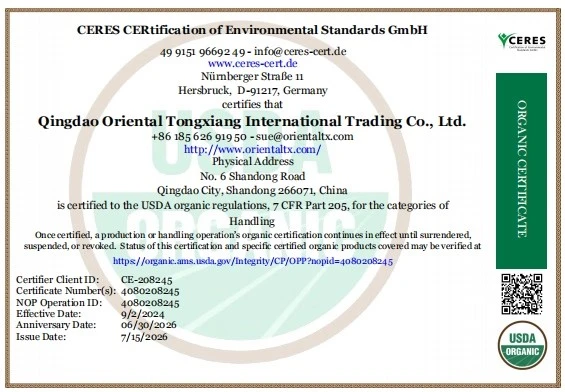
We can supply Halal, Kosher, ISO, FSSC and HACCP certificates.
Packaging & Supply
Standard commercial packaging:
- 20 kg bags / 25 kg bags
- Palletized shipments
For global B2B orders, buyers to confirm:
- Pallet Configuration
- Payment Method
- Expiration Date
- Quotation Type
- Container Loading Quantity
- Lead Time
- Shipping Port
- Storage Requirements
For repeat orders, supply plans can be negotiated to match your annual usage and delivery timeline.
FAQ
Q: What are the typical applications of Matcha Green Tea powder?
A: It is widely used in beverages, bakery products, confectionery, dairy products, ice cream, chocolate, health foods, and nutritional supplements.
Q: What are the key quality indicators of Matcha Green Tea powder?
A: Key indicators include color, particle size, aroma, taste, moisture content, tea polyphenol and catechin content, chlorophyll content, theanine content, microbial limits, heavy metal levels, and pesticide residues.
Q: Does Matcha Green Tea powder contain caffeine?
A: Yes. Matcha contains caffeine because it is made from the whole tea leaf. The caffeine content varies depending on the product.
Q: Is Matcha Green Tea powder suitable for people sensitive to caffeine?
A: People who are sensitive to caffeine should consume it with caution or choose decaffeinated Matcha products, if available. It is advisable to consult a healthcare professional if there are concerns.
Q: How can the authenticity and quality of Matcha Green Tea powder be verified?
A: Quality verification items: sensory check (color, aroma, taste), particle size, chemical indicators (tea polyphenols, catechins, theanine, chlorophyll), microbes, heavy metals, pesticide residues, third-party test reports.
Q: How should Matcha Green Tea powder be used in food processing?
A: Compatible with dry or wet ingredients per formulation. Disperse thoroughly in drinks to avoid clumps; pre-blend with dry mixes for baking. Dosage based on required color, flavor and functionality.
Q: Can you provide organic Matcha Green Tea powder?
A: Yes, we do have organic Matcha Green Tea powder. We can also customize specifications according to customer requirements.
Request a Matcha Green Tea powder Sample or Bulk Quotation
Need bulk matcha green tea powder for alcohol, baking, desserts & functional food? Send your requirements to receive specs, COA, sample details, packaging options and bulk quotes. Contact us for your matcha inquiry.
Hot Tags: matcha green tea powder, China matcha green tea powder manufacturers, suppliers, factory


