
Isolated Soy Protein (Soy Protein Isolate)
Product: Isolated Soy Protein (Soy Protein Isolate)
CAS No.: 9010-10-0
HS Code: 3504.0090
Molecular Formula: N/A - complex mixture of plant proteins (glycinin & β-conglycinin)
Molecular Weight: N/A - high-molecular-weight proteins (approx. 300–600 kDa)
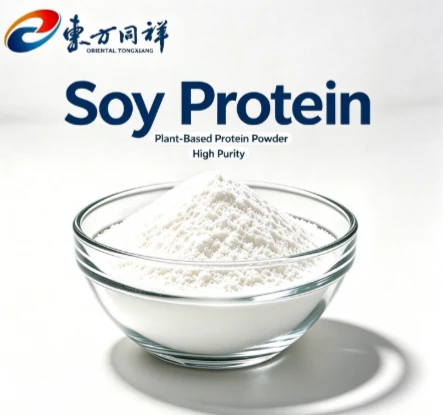
Appearance: Light yellow to off-white powder
Particle Size: ≥ 95% pass 100 mesh
Application: Beverages, Health products, Dairy, Plant-based foods, Sports nutrition
1. Product Overview
Isolated soy protein (ISP) is a high-purity plant protein containing a minimum of 90% protein on a dry basis, produced from high-quality non-GMO soybeans. It is supplied in bulk to food and beverage manufacturers for protein fortification and plant-based product development.
We supply isolated soy protein with good dispersibility, quick dissolution and stable performance in water-based systems. Each batch is released against the applicable specification with a COA and supporting technical documentation, and custom supply solutions can be discussed for specific protein level, particle size, dispersibility, packaging or formulation requirements.
With a PDCAAS of 1.0 and a complete essential-amino-acid profile, it helps manufacturers build high-protein, clean-label, dairy-alternative and plant-based formulations while contributing emulsification, gelation and water- and fat-binding functions.
2. Key Product Specifications
The table below summarises the core technical parameters. Values follow the applicable product specification.
|
Parameter |
Specification |
|
Product Name |
Isolated Soy Protein (Soy Protein Isolate) |
|
CAS No. |
9010-10-0 |
|
HS Code |
3504.0090 |
|
Raw Material |
Non-GMO soybean; low-temperature defatted soybean flakes, soybean lecithin |
|
Appearance |
Light yellow to off-white powder |
|
Odor |
No peculiar smell; no mildew |
|
Crude Protein (dry basis, N × 6.25) |
≥ 90% |
|
NSI (Nitrogen Solubility Index) |
≥ 88% |
|
Particle Size |
≥ 95% pass 100 mesh |
|
pH |
7.0 ± 0.5 (6.5–7.5) |
|
Moisture |
≤ 7.0% |
|
Ash |
≤ 6.0% |
|
Fat |
≤ 1.0% (≤ 0.5% available for premium grades) |
|
Crude Fiber (dry basis) |
≤ 0.5% |
|
Emulsification (protein : water : oil) |
1 : 5 : 5 |
|
Total Plate Count |
≤ 20,000 cfu/g |
|
Coliform |
≤ 30 MPN/100 g |
|
Yeast & Moulds |
≤ 50 cfu/g |
|
Salmonella |
Negative |
|
Staphylococcus aureus |
Negative |
|
Lead (Pb) |
Negative (per specification) |
|
Arsenic (As) |
Negative (per specification) |
|
Shelf Life |
12 months (minimum) |
|
Packaging |
20 kg/bag (paper bag with food-grade HDPE inner liner) |
|
Storage |
Store below 25℃; keep away from rain, damp and odorants |
Note: values follow the applicable product specification. Contact us for the latest COA, test methods and destination-market documentation before purchase or product registration.
Different grades suit different end applications. The matrix below summarises the main specifications available.
|
Grade |
Protein (min) |
NSI (min) |
Appearance & Characteristics |
Best For |
|
Standard ISP-90 |
90% |
Per specification |
Light-yellow powder, standard dispersibility |
General protein fortification, dairy, meat analogues |
|
Instant / High-NSI ISP |
90% |
88% |
High dispersibility, instant & quick dissolution, non-dusty |
Protein beverages, solid beverages, health products |
|
Organic ISP |
90% |
Per specification |
Organic soybean source |
Organic / clean-label product lines (on request) |
|
Custom grades |
90–95% |
Per specification |
Custom particle size, solubility and packaging |
Customer-specific formulations (to be discussed) |
Note: grade availability, certifications and custom specifications should be confirmed with our team for your destination market.
3. Key Benefits
High Protein Content - Provides ≥ 90% protein on a dry basis, among the highest levels of plant proteins.
Complete Amino Acid Profile (PDCAAS 1.0) - Contains all nine essential amino acids; protein quality comparable to whey and egg protein.
Clean Plant-Based Positioning - Supports vegan, dairy-free, lactose-free and clean-label product lines.
Good Dispersibility & Quick Dissolution - Disperses well and dissolves quickly in water-based systems, with a non-dusty powder.
Emulsification & Gelation - Helps stabilise emulsions and form gels, useful in beverages, dairy and meat-analogue applications.
Water & Fat Binding - Improves texture, yield and mouthfeel in processed and plant-based meat products.
Low Fat & Low Crude Fiber - Contributes a clean nutritional profile to protein-fortified products.
Non-GMO & Organic Options - Supports non-GMO and organic product claims (organic available on request).
4. Application Selection Guide
|
Application |
Typical Addition Level |
Main Contribution |
Key Formulation Consideration |
|
Protein beverages & shakes |
2–10% |
High protein, smooth mouthfeel |
Solubility, dispersibility, pH, flavour balancing |
|
Solid beverage powders |
5–20% |
Protein fortification |
Instant dissolution, caking, flavour |
|
Dairy & yogurt |
1–5% |
Protein boost, viscosity, stability |
Heat treatment, protein stability, gelation |
|
Plant-based milk alternatives |
2–6% |
Protein content, emulsion stability |
Particle size, sedimentation, off-flavour control |
|
Meat analogues / plant-based meat |
5–30% |
Texture, water/fat binding, gelation |
Hydration, flavour, cooking yield |
|
Bakery & snacks |
3–15% |
Protein fortification, structure |
Water absorption, dough handling, browning |
|
Sports nutrition & supplements |
10–40% (in dry mixes) |
High-quality protein, amino acids |
Mixing, solubility, taste masking |
|
Health & functional foods |
5–20% |
Protein, satiety, nutrition |
Interaction with other functional ingredients |
Note: typical addition levels are starting points for reference only. Adjust them according to the end-product formulation and confirm the applicable limits for each destination market.
5. Certifications & Compliance
Available certifications and compliance documents (subject to current certificates):
ISO 22000 Food Safety Management System
HACCP
Kosher
Halal
Non-GMO (Identity Preserved)
Organic (available on request)
The product is manufactured to the applicable enterprise standard. Batch-specific COA, specification, allergen statement, GMO statement and destination-market documentation can be provided on request; please confirm the current certificates for your market.
6. Packaging & Supply
Standard commercial packaging:
20 kg/bag - paper bag with food-grade HDPE inner liner
Palletization, container loading and custom packaging can be arranged. For international B2B orders, please confirm the following with our team:
MOQ - Minimum order quantity - subject to product grade, packaging and destination; available on request
Lead Time - Regular lead time - depends on stock availability, production schedule and order quantity
Sample Policy - Samples available for evaluation and formulation testing, subject to availability and order requirements
Payment & Trade Terms - Payment terms, trade terms and shipping port - to be confirmed based on the destination
7. Customization
Beyond the standard specification, we can support:
Custom protein level and dispersibility / NSI grades
Custom particle sizes and powder characteristics (instant, non-dusty, easy-mixing)
Blending with other plant proteins or functional ingredients (e.g., soy + pea, soy + rice, soy + collagen) for a target amino-acid profile
Custom packaging, labelling and pallet configurations
Organic and non-GMO sourcing options
For custom blends, the final formulation should be evaluated against the finished product's solubility, texture, stability and processing requirements.
8. Frequently Asked Questions
What is isolated soy protein?
Isolated soy protein (ISP) is a high-purity plant protein containing at least 90% protein on a dry basis, produced from soybeans by removing most of the fat and carbohydrate. It is widely used to fortify protein in foods and beverages.
Is soy protein a complete protein?
Yes. Isolated soy protein contains all nine essential amino acids in adequate amounts and achieves a PDCAAS of 1.0, a protein quality comparable to whey and egg protein.
What is the difference between isolated soy protein (ISP) and soy protein concentrate (SPC)?
ISP has a higher protein content (≥ 90%) than SPC (about 60–70%) because more carbohydrate is removed. ISP is generally preferred when high protein, clean taste and superior solubility are required.
What products can use isolated soy protein?
Typical applications include protein beverages and shakes, solid beverage powders, plant-based milk and meat alternatives, dairy and yogurt, bakery and snacks, sports nutrition and health supplements.
Is the soy protein non-GMO?
Yes, it is produced from non-GMO soybeans, and non-GMO documentation can be provided.
What certifications are available?
The product is manufactured to the applicable enterprise standard. Certifications and compliance documents such as ISO 22000, HACCP, Kosher, Halal and non-GMO statements are available on request; please confirm the current status for your destination market.
Can you provide a COA for each batch?
Yes. Batch-specific COA and supporting technical documents can be provided for qualified B2B buyers, covering protein, NSI, particle size, pH, moisture, heavy metals and microbiological limits.
What is the standard packaging and MOQ?
Standard packaging is 20 kg/bag (paper bag with food-grade HDPE inner liner). MOQ depends on product grade, packaging and destination - please share your required quantity for a quotation.
Can samples be provided?
Yes. Samples are available for evaluation and formulation testing, subject to availability and order requirements.
How should isolated soy protein be stored, and what is the shelf life?
Store below 25℃ in a dry place, away from rain, dampness and odorants. Shelf life is 12 months (minimum) under proper storage.
Is isolated soy protein suitable for vegan and dairy-free products?
Yes. As a plant-based protein, it suits vegan, dairy-free, lactose-free and clean-label product positioning.
How do I choose the right specification?
Start with your finished product, target protein level, required solubility and dispersibility, and certifications. Providing your current formulation or target specification helps us determine the most suitable grade.
9. Request a Sample or Bulk Quotation
Looking for bulk isolated soy protein for beverages, dairy, plant-based foods or sports nutrition?
Send us your target application and market. We can provide the product specification, COA, sample information, packaging details and a bulk quotation based on your requirements. We reply within 24 hours.
Please contact Oriental Tongxiang to discuss your isolated soy protein sourcing requirements.
Hot Tags: soy protein cas 9010-10-0, China soy protein cas 9010-10-0 manufacturers, suppliers, factory


