


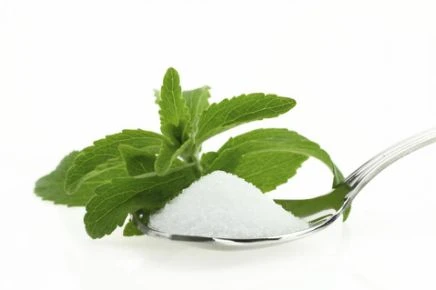
At present, stevioside has been widely used in the production of food, beverage and seasoning in Asia, North America, South America and EU. Especially in the throes of declining sales volume year by year, the healthier and more natural sweeteners have to be adopted so that consumers can know that beverages can be healthy too! At the end of 2016, there were 1396 drinks using stevia, a figure that is not really shocking to the beverage industry that is part of FMCG, but by comparison you know what that number means and you can see clearly from the chart below By 2010, there were only 149 drinks using stevia, which nearly doubled in six years. This means that stevioside has evolved from a well-questioned and taste-sensitive sweetener to a highly competitive sweetener product from the technical development to the application, which is clearly visible at domestic and international well-known food ingredients exhibitions , Stevioside research and development applications or trade-type exhibitors, both in number and size, on-site atmosphere are showing a year by year upward trend.
Quality Standard
Specification list
|
Items |
Methods |
Specifications |
|
Appearance |
Visual |
White Granular |
|
Assay, Rebaudioside A,% |
JECFA 2010 |
=97.0 |
|
Other Related Steviol Glycosides, % |
JECFA 2010 |
= 3.0 |
|
pH |
JECFA 2010 |
4.5 to 7.0 |
|
Loss on Drying, % |
JECFA 2010 |
= 5.0 |
|
Total Ash, % |
JECFA 2010 |
= 0.2 |
|
Arsenic, ppm |
AAS(ChP 2015 Part 4 (2321) |
= 1.0 |
|
Lead, ppm |
AAS(ChP 2015 Part 4 (2321) |
= 0.5 |
|
Cadmium, ppm |
AAS(ChP 2015 Part 4 (2321) |
= 1.0 |
|
Mercury, ppm |
AAS(ChP 2015 Part 4 (2321) |
= 0.1 |
|
Residual Solvents, ppm |
FCCVII |
Methanol = 200 |
|
Total Aerobic Bacteria, cfu/g |
ChP 2015 Part 4(1105) |
= 1,000 |
|
Molds & Yeasts, cfu/g |
ChP 2015 Part 4(1105) |
= 100 |
|
Escherichia coli, |
ChP 2015 Part 4(1106) |
Negative/g |
|
Salmonella sp. |
ChP 2015 Part 4(1106) |
Negative/25g |


